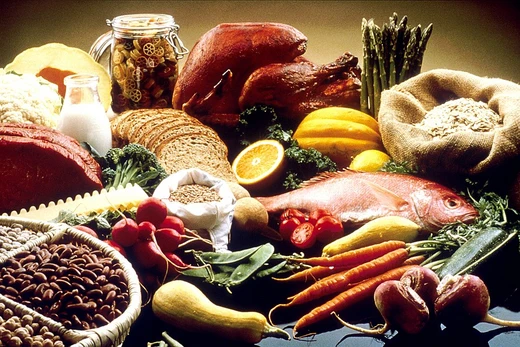
Beef
Culinary meat from cattle, with significant health and environmental impacts.

Beef is the culinary name for meat from cattle (Bos taurus). It is a widely consumed food, prepared in various ways such as steak or ground meat for hamburgers, and is a source of protein, iron, and vitamin B12. High consumption of beef, especially processed beef, is associated with increased risks of colorectal cancer and cardiovascular disease, and its production has a high environmental impact, being a primary driver of deforestation and the highest greenhouse gas emitter among agricultural products.
- field
- Food and agriculture
- known_for
- Third most widely consumed meat in the world, after pork and poultry
- largest_producers_2018
- United States, Brazil, China
- greenhouse_gas_contribution_2010
- About 4 billion tonnes (9% of anthropogenic GHG)
- global_deforestation_attribution_2005_20
- 41% from beef production expansion
Lore & Background
People have eaten the flesh of bovines since prehistoric times, with the aurochs hunted by Neanderthals.
Reader's Guide
Beef's significance lies in its global role as a major protein source and its substantial environmental footprint. Its production requires more land and water than other agricultural products and results in the highest greenhouse gas emissions. Health concerns include links to colorectal cancer and cardiovascular disease with high consumption, especially of processed beef. Some religions and cultures, such as Hinduism and Buddhism, prohibit beef consumption. The word 'beef' derives from Latin bōs, illustrating the English dichotomy between animal names (Germanic origins) and meat names (Romanic origins).
Did You Know?
- Beef is cognate with bovine through the Late Latin bovīnus.
- The rarely used plural form of beef is beeves.
- Some of the earliest known cave paintings, such as those of Lascaux, show aurochs in hunting scenes.
Deep Roots: From Aurochs to Global Staple
Humans have consumed the flesh of bovines for tens of thousands of years, long before the first farms existed. Neanderthals are known to have hunted the aurochs, the wild ancestor of modern cattle, and some of the oldest surviving cave paintings—those at Lascaux—depict aurochs in hunting scenes. The shift from hunting to herding marked a turning point: cattle were domesticated at least twice in evolutionary history. A second, around 7,000 years ago, produced Bos indicus in the Indian subcontinent. Taming feral Longhorn cattle became the foundation of an industry that first flourished in the stockyards of Chicago and New York.
From Ranch to Plate: Production and Health
Beef reaches the consumer through a wide spectrum of raising methods, from free-range ranching and backgrounding to the highly concentrated systems known as CAFOs. In the United States, these factory farms supply roughly 70 percent of the cow market and an estimated 99 percent of all meat, making them the dominant force in domestic production. This high-density confinement, however, carries food-safety trade-offs. The prevalence of manure in these operations creates conditions favorable to E. coli contamination, including the dangerous O157:H7 strain that cattle naturally harbor in their digestive tracts. To combat illness in crowded conditions, producers rely heavily on antibiotics; one analysis of FDA sales data found that 42 percent of medically important antibiotic use in the country is directed at cattle, raising alarm about resistant bacteria. Nutritionally, beef is a rich source of protein, iron, and vitamin B12. Its cuts are prized for steaks cooked to varying degrees of doneness, while trimmings are ground into products like hamburgers. Yet evidence links high consumption of red and especially processed beef to elevated risks of colorectal cancer and cardiovascular disease.
The Ecological Cost of the Herd
Of all agricultural products, beef exacts the steepest toll on the natural environment. Cattle graze across roughly 26 percent of the planet's land surface, and the vast fields devoted to growing their feed add further pressure. Feed efficiency compounds the problem; producing one unit of beef live weight may require 7 to 43 units of feed, compared with roughly 2 to 1 for chicken.
Language, Faith, and the Word 'Beef'
The very name we use for this meat carries the imprint of centuries of cultural layering. 'Beef' descends from the Latin bōs, while 'cow' traces back to Middle English cou; both, however, spring from the same Proto-Indo-European root *gʷou-. This split is part of a broader English pattern in which the living animal bears a Germanic name and the meat on the plate carries a Romance one—much like pig and pork, deer and venison, sheep and mutton, or chicken and poultry. The less common pairing of goat and chevon fits the same mold. 'Beef' is also cognate with 'bovine,' inherited through the Late Latin bovīnus, and its archaic plural form is 'beeves.' Beyond linguistics, beef occupies a deeply contested place in religious life. Several Indian faiths, most prominently Hinduism, prohibit the consumption of cattle flesh entirely. Buddhism, while opposing the act of slaughtering animals, does not maintain a formal doctrine declaring specific foods wrong to eat, placing it in a somewhat different ethical category. These prohibitions and distinctions shape dietary traditions and continue to influence global conversations about food, identity, and the boundaries of what is considered acceptable to eat.
Frequently Asked Questions
What are Beef's powers/role?
Beef functions as a nutrient-dense source of protein, iron, and vitamin B12, anchoring countless dishes from seared steaks to ground patties for hamburgers. Its versatility across cooking methods makes it a cornerstone of global cuisine.
What health risks does Beef carry?
Consistent high consumption of beef, especially in processed forms, has been associated with increased risks of colorectal cancer and cardiovascular disease. Most dietary guidelines suggest moderation rather than outright avoidance.
Why is Beef important to the food world?
As one of humanity's oldest and most adaptable protein sources, beef underpins culinary traditions on every inhabited continent. Its cultural weight is matched by ongoing debate over the environmental and health costs of its production and consumption.
More in Food 1-24
Elsewhere in the Food universe
Spotted an error? Know more?
This is a living reference — every entry is fact-audited, and reader corrections feed straight into our audit queue. Suggest an edit · See this site's audit record