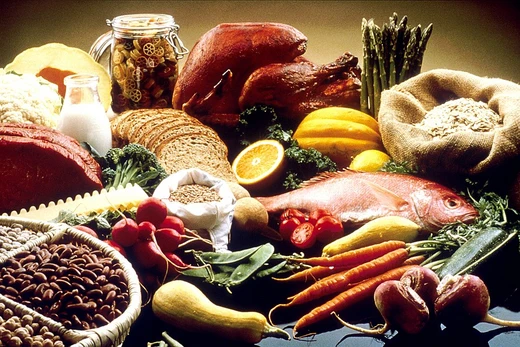
Chicken as food
Chicken is the second most consumed meat worldwide, after pork.

Chicken is the most common type of poultry and the second most consumed meat in the world, after pork. Owing to the relative ease and low cost of raising chickens, chicken meat and eggs have become prevalent in numerous cuisines. Chicken can be prepared in a vast range of ways, including baking, grilling, barbecuing, frying, boiling, and roasting, and since the latter half of the 20th century, prepared chicken has become a staple of fast food.
- field
- Food and agriculture
- known_for
- Most common type of poultry; second most consumed meat worldwide
- global_population_2011
- 19 billion chickens
Lore & Background
The modern chicken is a descendant of red junglefowl hybrids along with the grey junglefowl first raised thousands of years ago in the northern parts of the Indian subcontinent. Chicken as a meat has been depicted in Babylonian carvings from around 600 BC and was one of the most common meats available in the Middle Ages. For thousands of years, a number of different kinds of chicken have been eaten across most of the Eastern Hemisphere, including capons, pullets, and hens. In the United States in the 1800s, chicken was more expensive than other meats and was sought by the rich. Chicken consumption in the U.S. increased during World War II due to a shortage of beef and pork. In the post-World War II period, the USDA along with the A&P and others embarked on a program to breed the chicken of tomorrow, leading to the creation of the Cornish Rock Cross in the late 1940s—a chicken with an efficient feed conversion ratio, speedy to rear, and good meat quality. The trends for improved feed conversion ratio and quality have continued, and the adoption of higher-yielding chickens spread from the USA to Europe and beyond.
Reader's Guide
Chicken as food holds immense significance as the most common type of poultry and the second most consumed meat globally, after pork. Its importance stems from the relative ease and low cost of raising chickens compared to mammals such as cattle or pigs, making it accessible across diverse cuisines. The poultry farming industry takes on a range of forms, from intensive farming in developed countries to more traditional techniques in less-developed areas. The United Nations estimated 19 billion chickens on Earth in 2011, outnumbering humans more than two to one. Chicken's legacy includes its role in fast food since the latter half of the 20th century and its perception as more healthy than red meat, with lower concentrations of cholesterol and saturated fat. The breeding of specialized meat chickens, such as the Cornish Cross, has dramatically improved feed efficiency and growth rates, transforming global meat production. However, this has also raised ongoing scientific and ethical discussions regarding the treatment of chickens as sentient animals capable of experiencing pain and distress. Issues such as the use of the feed additive roxarsone and antibiotic resistance in poultry production have prompted regulatory changes and voluntary withdrawals of certain drugs.
Did You Know?
- The modern chicken is a descendant of red junglefowl hybrids along with the grey junglefowl first raised thousands of years ago in the northern parts of the Indian subcontinent.
- In the United States in the 1800s, chicken was more expensive than other meats and was sought by the rich.
Frequently Asked Questions
Who is Chicken as food?
Chicken is the most widely raised poultry species and ranks as the second most consumed meat globally, trailing only pork. With roughly 19 billion chickens alive as of 2011, it forms the backbone of protein supply across virtually every cuisine on Earth.
Why is Chicken as food important?
Its low cost of production and versatility make it accessible to a far broader range of populations than many other meats. It is the single most produced type of meat worldwide, serving as a dietary staple from home kitchens to industrial food operations.
What are Chicken as food's powers or abilities?
Chicken can be cooked through an extraordinary range of methods—baking, grilling, barbecuing, frying, boiling, and roasting—making it adaptable to nearly any culinary style. This versatility is a key reason it has outpaced other proteins in global consumption.
More in Food 1-24
Elsewhere in the Food universe
Spotted an error? Know more?
This is a living reference — every entry is fact-audited, and reader corrections feed straight into our audit queue. Suggest an edit · See this site's audit record